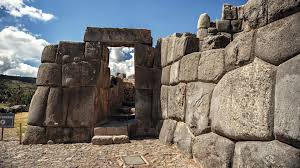
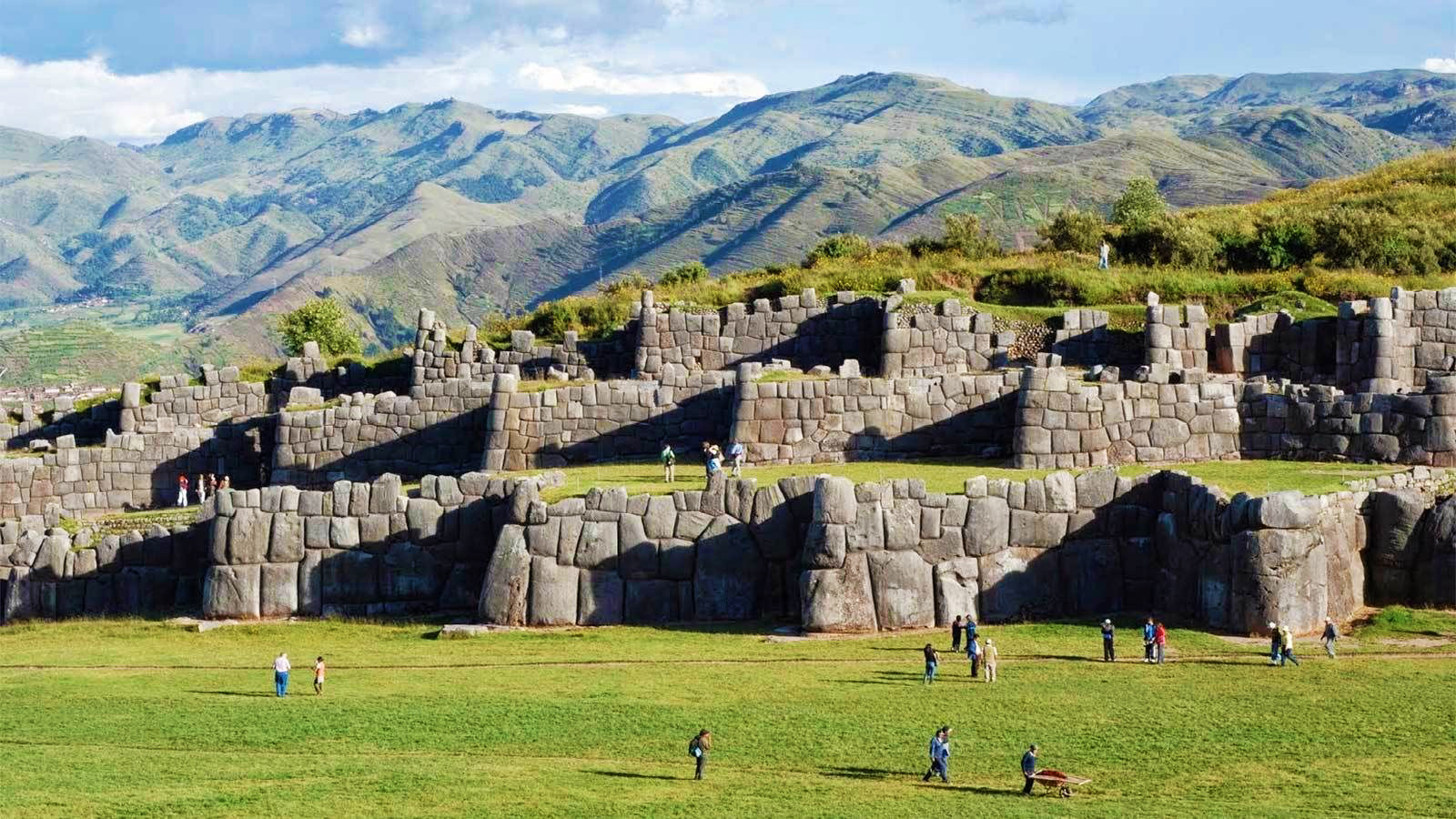
One of the most famous Cusco archaeological complexes preferred by tourists, which has even surpassed the number of visits to the wonderful Machu Picchu this year, is Sacsayhuamán. Another monumental marvel of Inca engineering and architecture, declared Cultural Heritage of the Nation and whose construction with cyclopean stones astonishes the world. For many years it has been the main setting for the largest celebration of the Cusco festive calendar: Inti Raymi.
Sacsayhuamán, a Quechua word that means “satisfied falcon,” is located 2 kilometers north of the city of Cusco and 3,700 meters above sea level. In the times of Tahuantinsuyo it was the most important place after the residential core of the capital of the empire, as it was located in what was considered the “head” of the silhouette of the puma, according to the urban design adopted. And because it was on a hill, it was consecrated as the “House of the Sun” of the Hanan Cusco dynasty.
Its construction began in the 15th century during the government of Pachacutec, the most outstanding of the Inca rulers, and was continued by his successors Túpac Yupanqui, Huayna Cápac and Huáscar.
Although the best-known building is the imposing fortress, whose enormous stone walls motivate all visitors to take photos, this area is part of the 96 sites that make up the Sacsayhuamán Archaeological Park, declared Cultural Heritage of the Nation on July 11, 1982, by Law No. 23765.
It has a total area of 2,997.26 hectares and among the 96 archaeological sites that comprise it, Q’enqo , Tambomachay, Kallachaca , Patallaqta , Amaro- Markawasi and the monumental area or fortress, made up of the Baluartes, Muyuqmarca , Rodadero and Chinkana , stand out .
Recent discoveries show that Sacsayhuamán was originally built as a ceremonial center, given that several enclosures dedicated to the worship of the sun, moon, water and other deities of the Inca religion were found inside.
In the colonial period, the Sacsayhuamán Archaeological Park was part of the ancient parishes of San Blas, San Cristóbal and San Sebastián, which made up the current districts of Cusco and San Sebastián.
Qhapaq are witnessed Ñan heading towards Antisuyo where the Amazon is located, as well as secondary roads heading northeast towards Qorimarca , heading northwest towards Huchuy Cusco, and the road to Umasbamba and Yucay . Another segment of the road is the one that leads to Kallachaca-Pumamarca that linked the city of Cusco with the Tambomachay micro-basin, which continuing to the northeast accessed the Qorao pass to join a single road on the trunk towards the Antisuyo in the direction of the Andes of Paucartambo.
What draws most attention in Sacsayhuamán is, as with Machu Picchu and other amazing Inca buildings, the enigma that surrounds its construction, especially the fortress. The gigantic polished stones that make up with amazing and perfect union the high and overwhelming walls placed in the shape of wedges in two parallel rows leave everyone absorbed.
There are versions that indicate that more than 20,000 men extracted the stones from quarries located about 20 kilometers away and moved them to the hill to build the defensive bastion of the city of Cusco. This place was the scene of the confrontation between the army of Manco Inca, who regained control of the city of Cusco for a time, and the Spanish conquistadors, who finally won the contest.
After this defeat, part of the fortress was destroyed to prevent an eventual second Inca attack. The stones taken from Sacsayhuamán were used to build houses and churches in the city of Cusco. This led to Sacsayhuamán housing only 30 percent of its original structure. Despite this, the site preserves its enormous lithic structures whose weight is weighed at more than 100 tons.
Tourist attraction
Sacsayhuamán is the main setting for the Inti Raymi or Festival of the Sun, which is celebrated every June 24 and is the most important festival in Cusco’s jubilee calendar. Likewise, it has been the location for the filming of films of great global success such as “Transformes, the awakening of the beasts”, shown this year.
The magnetism it generates in tourists is such that it has even surpassed Machu Picchu in visits. It is estimated that between January and August of this year, around 995,000 travelers, including nationals and foreigners, visited Sacsayhuamán, a figure that doubled that registered by the world wonder in the same period.
To enter the archaeological site you need to purchase the general Tourist Ticket, the price of which is 130 soles for adults and 70 soles for students and children. This ticket allows entry to 14 tourist attractions in Cusco, including Sacsayhuamán and the nearby archaeological complexes. You can also visit the archaeological parks located in the Sacred Valley of the Incas and in the South Valley.
It is also possible to purchase a partial Tourist Ticket to visit only Sacsayhuamán and the nearby archaeological sites. The price is 70 soles for adults and 40 soles for students and minors. This ticket lasts for only one day.
The opening hours of the Sacsayhuamán Archaeological Park are Monday to Sunday from 7:00 am to 5:30 pm
JK Travel & Exhibition, is a tourist enterprise that offerd specials tours and services .